


Once archaeological evaluation provides a clearer understanding of a site, the next step is deciding how to manage its heritage assets. Heritage mitigation and monitoring support the protection of archaeological remains and historic buildings, helping specialists make informed decisions about their future. Not every discovery requires further excavation. Depending on the significance of the findings, archaeologists may recommend preservation, additional recording or continued monitoring. They may also suggest changes to development plans to reduce potential impacts on historic structures and buried archaeology.
Findings from earlier investigations can help specialists plan heritage mitigation and monitoring, supporting decisions about how best to protect archaeological remains and historic structures.
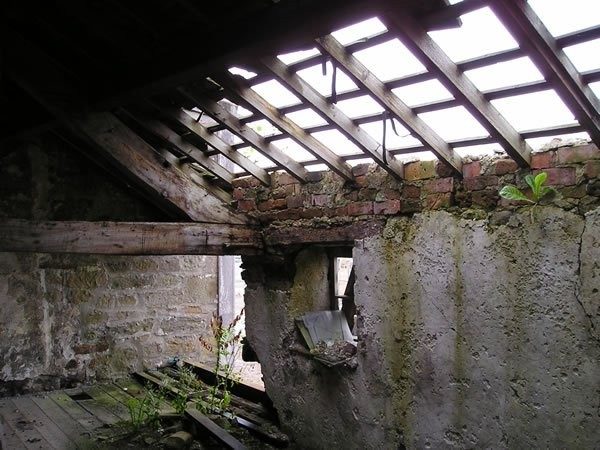
Exposed roof timbers and deteriorating masonry at Salesbury Hall, highlighting the importance of recording and protecting historic structures
For example, project teams may preserve significant archaeological remains in situ rather than disturb them. In other cases, project teams may change development plans to avoid sensitive areas. They can also reduce impacts on historic buildings. If preservation isn’t possible, archaeologists may need to excavate and record remains before construction begins.
Archaeological monitoring during groundworks may also help identify and record previously unknown remains. The appropriate response depends on the archaeological significance of the site, the potential risks and the requirements of the project.
Archaeological monitoring during groundworks focuses on identifying and recording remains uncovered during construction. However, monitoring the condition of historic buildings is a separate aspect of heritage management. Structural monitoring helps specialists identify movement, deterioration and other changes that could affect a building’s long-term preservation.
Historic buildings and structures can change over time due to ageing, environmental conditions, structural movement and ongoing use. Regular monitoring helps identify these changes and provides valuable information about the condition of heritage assets. By recording measurements at established monitoring points over time, survey teams can identify potential movement and help specialists assess whether further investigation or conservation work may be needed. This is particularly important for historic structures, where even small changes can affect their long-term preservation.
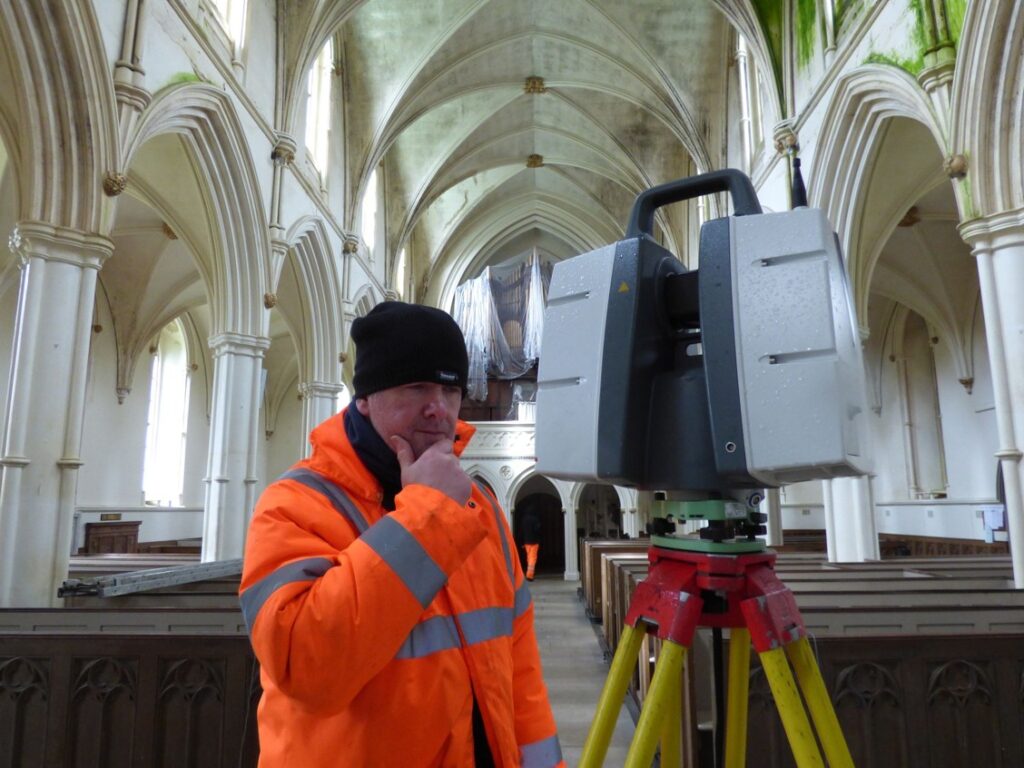
Laser scanning inside a historic church to create an accurate record of the building, supporting conservation and future condition assessments.
Laser scanning and photogrammetry can provide detailed records of historic buildings, capturing their existing condition and architectural features. These surveys can support conservation, restoration and provide a valuable baseline for future assessments.
Where ongoing structural monitoring is required, repeat measurements to established survey points can help identify movement or changes over time. This provides specialists with reliable information to assess potential issues and determine whether further investigation or conservation work is needed.
The archaeological process does not end when fieldwork is complete. After fieldwork, archaeologists assess, interpret and record the evidence to develop a clearer understanding of the site. This may involve analysing recovered materials, reviewing survey data, preparing archaeological reports and ensuring that relevant records are appropriately archived.
Bringing together the findings from excavation, geophysical surveys, historical research and measured surveys helps develop a more complete interpretation of the site’s development and significance.
Throughout this series, we have explored how historical research, surveying and archaeological investigation work together to build a clearer understanding of heritage sites. Each stage adds valuable evidence, helping specialists identify important features, assess their significance and make informed decisions about future work.
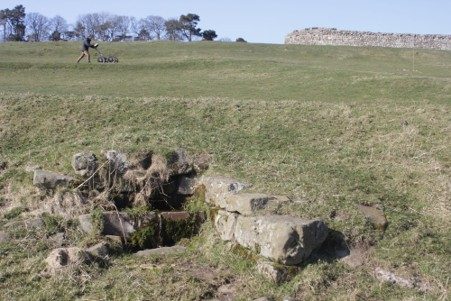
Geophysical surveying near Hadrian’s Wall, supporting the investigation and understanding of a historic landscape
At this final stage, specialists bring together archaeological findings and survey evidence to inform heritage mitigation and monitoring decisions. GIS and 3D models can help show how historic structures, archaeological remains and the surrounding landscape relate to one another.
Importantly, archaeological interpretation is not always final. New evidence may confirm earlier findings, challenge existing assumptions or reveal relationships that were not previously understood. The value of a phased approach is therefore not simply in using different survey and investigation techniques. It lies in bringing the evidence together, asking the right questions at each stage and making informed decisions about what happens next.
By bringing together the evidence from each stage, archaeological investigations can become more focused, helping protect sensitive heritage assets, minimise unnecessary disturbance and support responsible conservation and development.
Planning work on a heritage site? MET Consultancy Group can support the early stages of investigation through specialist surveying and geophysical services, helping build the evidence needed to inform further archaeological decisions.
Comments Off on Heritage & Archaeology – Stage 6: Mitigation, Monitoring and Interpretation